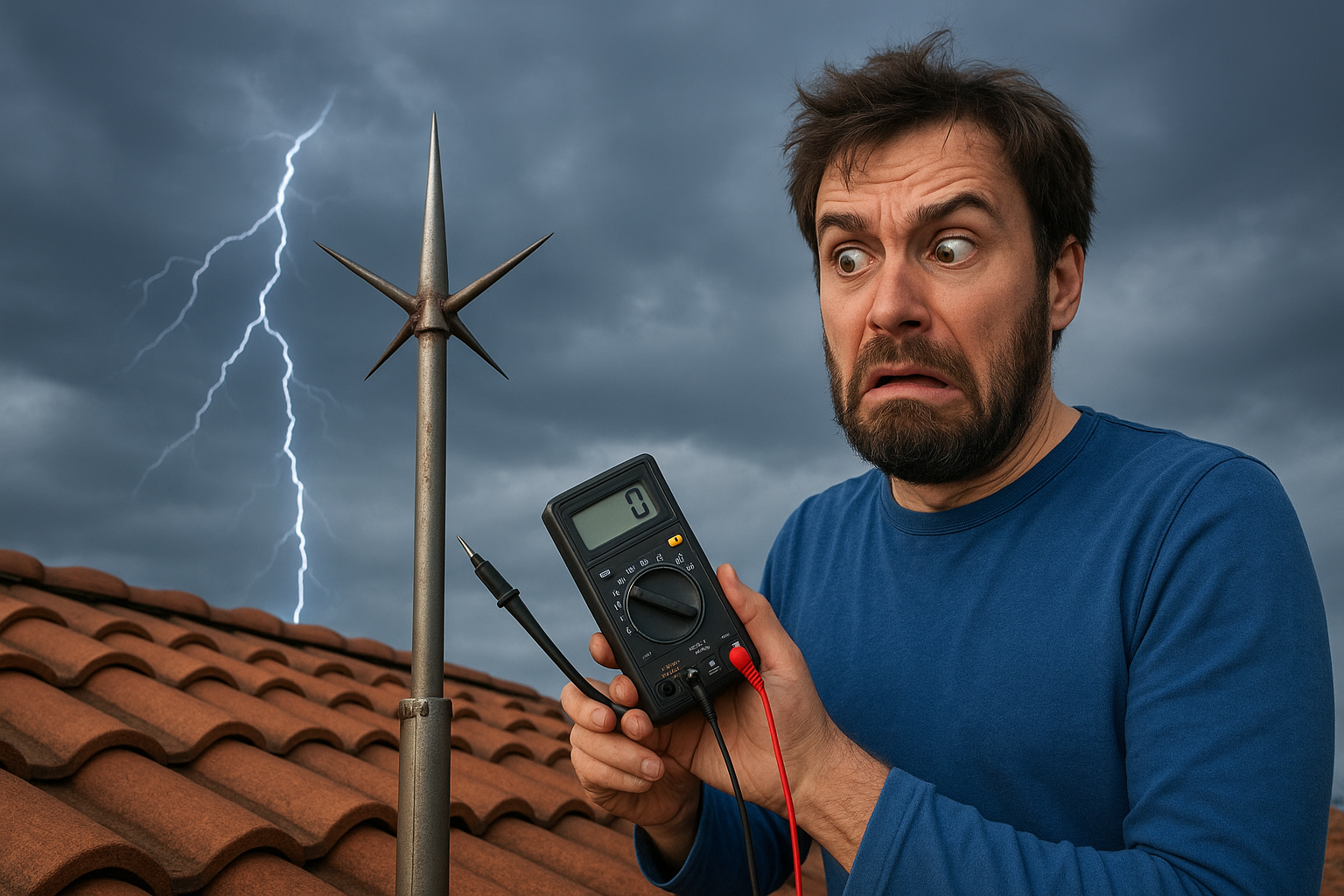
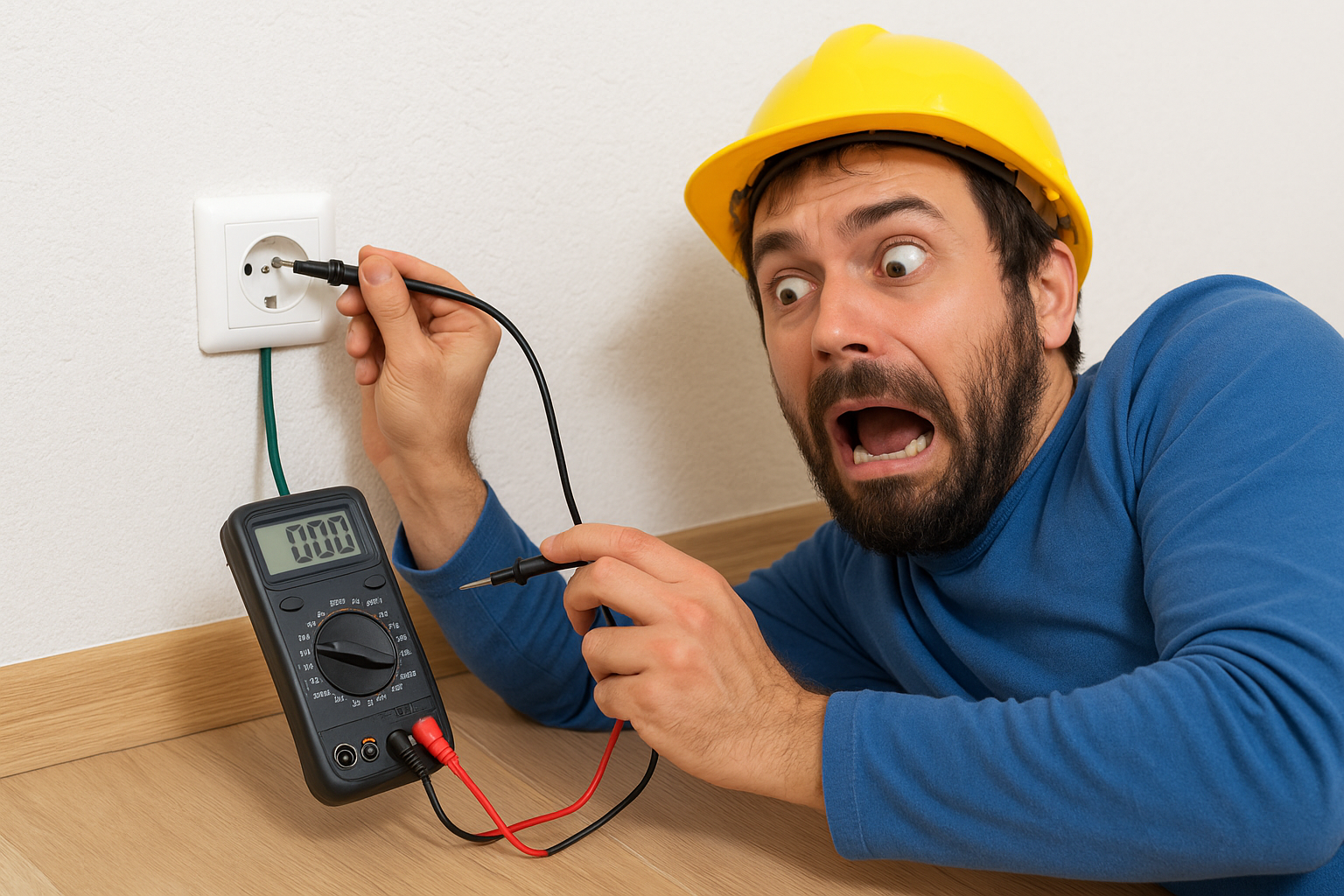
Yes, I know: “grounding” sounds like something you do with a rake in the garden, and “atmospheric discharges” brings to mind cinematic lightning and hair standing on end. But in reality, these are two things that protect your life, your home, your office and — if you’re lucky — even your wallet. Here you’ll find everything you need to know: why they’re important beyond regulations, what checks to do, when to do them and how to recognize the signs that something’s wrong. With irony, but without taking safety lightly.
Why it’s not just “to comply with the law”
Beyond the regulatory obligation, checking the grounding and the lightning protection system (LPS — Lightning Protection System) serves to:
Protect people: efficient grounding reduces the risk of electric shock for those who touch metal parts.
Avoid fires caused by fault currents or discharge sparks.
Protect electronic equipment and data: lightning and surges shut down servers, PCs, appliances, and office machines.
Reduce economic damage and downtime: fewer faults = less operational downtime and fewer emergency interventions.
Improve insurance coverage: many policies require certified systems and documented maintenance to recognize claims.
Increase the value and safety of the property: updated certificates and reports are sellable as a “plus”.
Basic concepts in a nutshell (so you can talk like a technician at the bar)
Grounding: low-resistance path that carries a fault current to the ground.
Equipotential bonding: connecting metal masses together to avoid dangerous potential differences.
Atmospheric discharges (LPS): capture system (rods, trees, structures), down conductors and earth electrodes that manage the lightning’s energy.
SPD (Surge Protection Device): surge protectors that shield devices from induced or direct overvoltages.
What checks to do (and what they mean, explained simply)
Visual inspection
What: checking the mechanical condition of pits, clamps, cords, down conductors, joints, and equipotential points.
Why: corrosion, loose bolts or oxidized joints are frequent causes of failure.
Measurement of earth resistance (Fall-of-Potential or clamp-on)
What: measures how “well” the electrode conducts to earth.
Why: too high resistance reduces the effectiveness of grounding.
Practical note: aim for low values (ideally “single digit” ohms for critical systems; in many situations resistances ≤ 10 Ω are considered acceptable), but the target value depends on the site, regulations, and use.
Continuity and resistance test of protective conductors
What: checks that all masses and protective conductors are electrically continuous and uninterrupted.
Why: a broken conductor nullifies protection.
Equipotential bonding system test
What: check that all masses (gas, water, metal structures) are properly connected.
Why: prevents dangerous potential differences.
SPD (surge protector) check
What: visual check (LED/status), resistance measurements, and replacement test if status is compromised.
Why: SPDs degrade after events or over time; a “green” indicator isn’t always enough: check dates and history.
Check of LPS down conductors/cables
What: electrical continuity of the down conductor, absence of interruptions, proper fixings.
Why: lightning seeks the shortest path: you need a safe and continuous down conductor.
Test of residual current and protection circuit breakers
What: trip test (time and residual current) of residual current devices (RCD).
Why: they ensure protection against leakage current; a regularly tested RCD is a lifesaver.
Loop/loop impedance measurements (if required)
What: checks that the fault current finds a path with sufficient impedance to trigger the protection device.
Why: prevents fault currents too low to trip the devices.
Specific checks for lightning protection (LPS)
Inspection of the capture area: integrity of rods or capture devices.
Continuity of down conductors: electrical test on each down conductor; corroded welds or joints are hazards.
Connection of electrodes/collectors: check that all electrodes (rainwater, tunnels, etc.) are connected and working.
Check of dedicated LPS grounding system: sometimes the LPS has a separate electrode: it must be measured and its interaction with the rest of the building’s earth evaluated.
SPD check on network and load side: appropriate and well-coordinated SPDs (Type 1, 2, 3 where necessary).
Frequency of checks — a practical (and flexible) rule
Visual inspection: annually (at least).
Complete electrical measurements (earth resistance, continuity, RCD test, SPD check): every 1–3 years depending on the importance of the system and the environment (corrosive or critical environments → more frequent checks).
After significant events: whenever there has been a strong lightning strike nearby, structural work, excavations, renovations or interventions on the electrical system.
For industrial/critical systems: customized maintenance plans; often mandatory annual checks.
Note: precise deadlines may be dictated by technical standards or insurance requirements: always ask the technician performing the check for the regulatory reference.
Tools used by technicians (and how you know they’re not improvising)
Earth tester (analog or digital) for fall-of-potential; clamp-on earth tester for measurements without digging.
Insulation tester (megger) for insulation resistance.
Loop/impedance tester and RCD tester for functional protection measurements.
Clamp meters, multimeters, thermal cameras (for hot spots), continuity clamps.
SPD test tools or visual check of indicators.
If the technician doesn’t show their instrument or refuses to leave a report, that’s a red flag.
Practical advantages beyond regulatory compliance
Reduction of electronic faults: servers, photovoltaic inverters, alarm systems and PLCs will thank you.
Fewer service interruptions: essential for offices, shops, professional studios.
Lower insurance costs (or fewer problems in case of a claim): documentation = proof of diligence.
Greater safety for staff and lower legal risks for the employer.
Greater peace of mind during spectacular thunderstorms.
Small tips and “quick wins” you can do right away
Make sure that excavations or garden work haven’t cut the earth conductors.
Visually check the earth pits: standing water, corroded clamps? Report it.
Check that metal masses (taps, pipes, railings) are connected to equipotential bonding where required.
Use SPD on the main panel and on sensitive points (critical electronics, servers).
After a very strong thunderstorm, request a check: a nearby lightning strike can degrade SPDs or fragment joints.
What to ask the technician / what the report should contain
Useful questions:
Which tests will you perform (list those above)?
What equipment will you use? (model and calibration).
Which standards do you refer to? (e.g. CEI/IEC — ask for the reference).
How soon will you deliver the report?
What actions do you recommend if the values are not compliant?
The report should contain:
list of tests performed and instruments used;
measured values (earth resistance, RCD results, continuity) with tolerances;
photographs of critical points;
date and signature of the technician;
plan of corrective actions and priorities;
suggested date for the next check.
Common mistakes (that cause avoidable dramas)
Not documenting checks → problems with insurance.
Ignoring post-storm signals: SPDs off, devices that “trip” more often.
Using unsuitable or unsoldered clamps/collars on LPS down conductors.
Confusing working grounding with “just put there”: quality matters, not just presence.
Not considering the interaction between the LPS and the electrical system (coordinating surge protectors, equipotential bonding).
Quick case study (to understand the risk)
Imagine the bad sheriff: lightning strikes the roof, the current seeks the path to ground. If the down conductor is corroded, the current jumps onto pipes, ducts, and metal enclosures. If the masses are not at common potential, someone touching two different objects risks receiving a dangerous shock. If the SPDs are degraded, the company server gets a surge and your productivity says goodbye for days. Prevention costs much less than repair.
Conclusion (serious but with a final joke)
Grounding and lightning protection aren’t the sexiest topic in a catalog, but they’re among the very few jobs that save you from crying over a fried PC… or worse. A checked system, with a clear report and scheduled maintenance, is an investment in safety, savings, and peace of mind.
If you want, Gruppo Impianti Ristrutturazioni can take care of:
site inspection and lightning risk assessment;
detailed measurements and reports;
installation or upgrade of SPDs and grounding systems;
customized periodic maintenance plan.
Bring us the site plan, the latest measurements (if you have them) and the list of critical devices: we’ll prepare a quote and a verification schedule for you — with the certificate in hand and guaranteed irony, but not the risks.