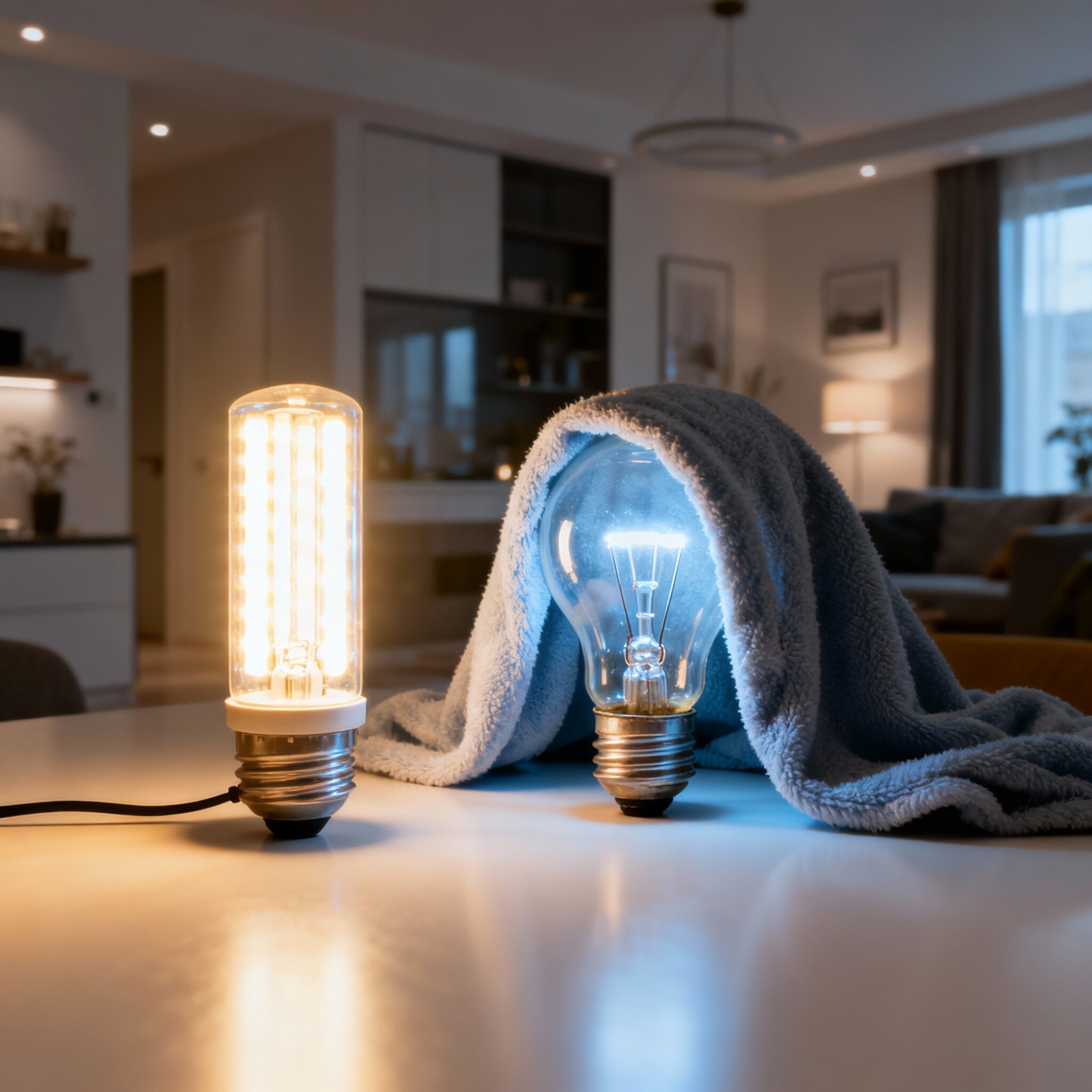

Imagine this scene: you're in the living room, the light is dim, on the coffee table an incandescent bulb is slowly heading toward its well-deserved retirement — or maybe not, because it's still there after ten years and every time you look at it you say, "I'll change it tomorrow." But then you discover that changing that bulb could reduce your electricity bill, improve the color of your wine (yes, you heard right), and even make you feel a little less guilty toward the planet. Welcome to the wonderful world of LEDs.
This article is for those who really want to understand — without half-truths or lectures — how LEDs work, why it's worth installing them, how to choose them without making the usual DIY mess, and above all, how to respond to the most common excuses humans invent for not replacing old bulbs. Grab a coffee (or a tea under the right light) and let's go.
1. What is an LED (without sounding like a bored technician)
LED stands for Light Emitting Diode — a diode that emits light when current passes through it. In other words: no filaments that burn out, no glass that gets so hot you could cook an egg (okay, almost), and a long operational life. LEDs generate light much more efficiently than old incandescent bulbs and even many fluorescents.
Quick advantages in understandable words:
Much longer lifespan (thousands of hours more).
Lower energy consumption for the same amount of light.
Lower heat emission (they don't turn your home into an oven).
Wide choice of color temperatures and intensity levels.
2. Lumens, watts, and why you shouldn't fall in love with wattage
Once upon a time there was the watt: "I bought a 60-watt bulb" meant everything. Today, the watt measures how much electricity the bulb consumes, NOT how much light it produces. The real unit to look at is the lumen (lm): it's the amount of light emitted.
Practical rules:
Incandescent 60 W ≈ 700–800 lumens.
With LEDs: to get ~800 lumens you need 8–12 W (depends on efficiency).
If you only look at the wattage, you risk buying something that consumes little but also lights little (awkward when you turn on the light and it feels like you're in a bunker).
So: look for lumens on the package, not watts. Watts are only useful for calculating consumption.
3. Color temperature and color rendering — yes, they also affect your mood
Color temperature is measured in Kelvin (K):
2700–3000 K = warm light (similar to incandescents): cozy, for living rooms and bedrooms.
3500–4100 K = neutral: great for kitchens, bathrooms, or home workspaces.
5000–6500 K = cool/daylight: ideal for garages, workshops, work areas where concentration is needed.
CRI (Color Rendering Index): indicates how well a light source reproduces colors compared to natural light. It ranges from 0 to 100. For residential interiors look for CRI ≥ 80; for accurate colors (design, professional kitchen) better ≥ 90.
Yes, choosing the wrong temperature can make you look tired, make the wall's white look yellowish, or the red of a tomato look like a mysterious object.
4. Energy savings: a concrete example (step-by-step calculations)
Let's do the math as accountants and home engineers like. Practical example:
Situation: you replace a 60 W incandescent bulb with an equivalent 9 W LED. The bulb stays on 4 hours a day. Hypothetical electricity price: €0.25/kWh (example — check your rate).
Annual incandescent consumption:
Power = 60 watts = 60 / 1000 = 0.060 kW.
Hours/day = 4 → Hours/year = 4 × 365 = 1,460 hours.
Annual energy = 0.060 kW × 1,460 h = 87.6 kWh.
Annual cost = 87.6 kWh × €0.25/kWh = €21.90.
Annual LED consumption:
Power = 9 watts = 9 / 1000 = 0.009 kW.
Annual energy = 0.009 kW × 1,460 h = 13.14 kWh.
Annual cost = 13.14 kWh × €0.25/kWh = €3.285 → round up to €3.29.
Annual savings per bulb:
Energy saved = 87.6 − 13.14 = 74.46 kWh.
Money saved = 21.90 − 3.29 = €18.61.
So, each replaced bulb can save you about €18.61 per year, with the light on an average of 4 hours a day. If you have 10, multiply: €186.10 a year. Not bad for a small initial expense.
Remember: the numbers change if the electricity rate is different or if the usage hours are higher. But the logic is always the same: fewer watts = less consumption.
5. Lifespan and maintenance: how long do LEDs really last?
Manufacturers often state 15,000–50,000 hours. In practical terms:
15,000 hours at 4 h/day = 10 years.
25,000 hours at 4 h/day ≈ 17 years.
Note: actual lifespan depends on product quality, heat management (LEDs don't like heat), and usage conditions. Buy reliable brands and check warranties.
6. Dimmers, sockets, and compatibility: the technical side that ruins the party
Not all LEDs are dimmable. If you have an existing dimmer switch designed for incandescents, make sure that:
The LED bulb is dimmable (it says so on the box).
The dimmer is compatible with LEDs (old triac dimmers may not work well: flickering, noise, reduced dimming range).
Same goes for sockets: E27, E14, GU10, MR16... always check the socket and physical size (some LEDs have large heat sinks and don't fit in low chandeliers).
7. Types of LED lamps and where to use them
Bulb (E27/E14): direct replacements for traditional bulbs.
Spot GU10 / MR16: for spotlights, pay attention to transformer compatibility.
LED strips: great for accent lighting, TV backlighting, or under cabinets. Check the IP protection rating if used in bathrooms or outdoors.
Panel and Downlight: for ceilings, diffuse and clean light.
Smart lamps: LEDs connected via Wi-Fi/Bluetooth; more expensive but offer color adjustment and automation.
8. Common buying mistakes (and how to avoid them)
Buying unknown brands and very cheap prices → result: dissatisfaction, poor light, short lifespan.
Not checking lumens/CRI/color temperature → wrong choice.
Ignoring heat dissipation → LEDs that degrade quickly.
Thinking that "smart" is always useful → often it's just an expensive extra.
Practical tip: buy from stores with a return policy and read reviews (detailed ones say if the bulb flickers or changes color over time).
9. Sustainability and disposal
LEDs contain electronic components: do not throw them in the general waste bin. Take them to the WEEE collection center or return them to the seller (there is often a collection point). Remember: saving energy is important, but proper disposal is the cherry on the green cake.
10. The most popular excuses for NOT installing LEDs — and how to gently demolish them with irony
Excuse 1: "They're too expensive."
Reality: the initial price is higher, but the payback through energy savings and lifespan is often within a few years. And then, consider it an investment that eliminates the burned-out-bulb emergency in the middle of dinner.
Excuse 2: "The light is cold, it feels like a hospital."
Reality: choose a warm temperature (2700–3000 K) and high CRI. No hospital required.
Excuse 3: "LEDs don't render colors."
Reality: buy LEDs with CRI ≥ 90 and you'll see the red of the tomato shine like a work of art.
Excuse 4: "They cause problems with dimmers."
Reality: get dimmable LEDs and replace the old dimmer if necessary. A small hardware update solves it.
Excuse 5: "I already have so many different lamps, it's a mess to change everything."
Reality: start with the ones you use most. Change the bulbs in rooms where you leave the light on for a long time first: you'll get immediate savings.
Excuse 6: "But the savings are minimal, does it really make a difference?"
Reality: multiply by all the lamps in the house and over the years: the savings become substantial. And less heat also means less work for the air conditioner in summer.
11. Practical tips to get started today (yes, today!)
Take an inventory of lamps: number, socket, average hours of use.
Priority: lamps used >4 h/day (kitchen, living room, hallways, outdoors).
Choose lumens and color temperature: for living room 2700–3000 K; for kitchen 3500–4000 K.
Check CRI (≥80, better ≥90 for true colors).
Check if you need dimmers and compatibility.
Keep old lamp holders if you want to reduce initial expense: replace only the bulbs.
Choose reliable brands and warranty (2–5 years).
Recycle old bulbs properly.
12. Smart trends (if you want the hi-tech touch)
Smart bulbs allow for lighting scenarios, integration with voice assistants, and extra savings by scheduling on/off times. They're useful but not necessary: most savings come from LED efficiency, not intelligence.
Turn on common sense (and the LED)
LEDs are more than a trend: they're a practical, efficient, and often aesthetically better choice. If you still haven't made the switch, you're probably keeping an old habit alive more out of laziness than good reasons. And if you need a romantic excuse to start, think about this: lower bills, less heat, more light tailored to your environment and your favorite wine.
Close this article and go look at the bulb you have in your kitchen. If it's the one many people have in their grandparents' photos (classic incandescent), now you know EVERYTHING you need to change it wisely. And — promise — you won't feel guilty at every bill anymore.
Would you like me to prepare a PDF checklist for replacing lamps room by room, with personalized calculations on hours of use and estimated savings? I can do it right away. (Okay, maybe I always say that; but this time I mean it.)