
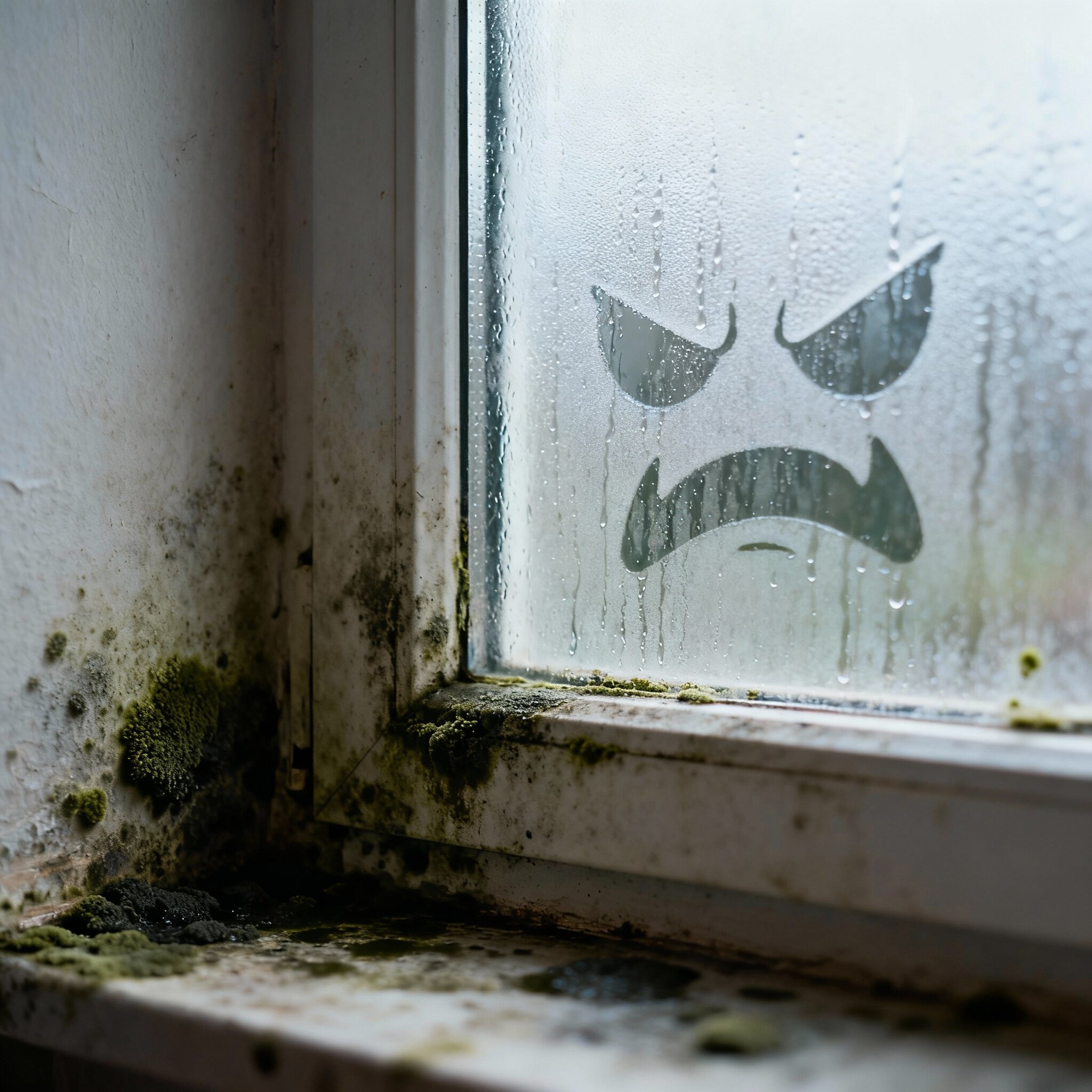

A practical, comprehensive guide with a dash of irony — because mold is not a work of art and shouldn't be hung on the wall.
Condensation is that annoying film of water that appears when humid air meets cold surfaces. If you neglect it, it turns into mold: black stains, musty smell, allergies, and embarrassing comments from guests. But don't panic: almost always it can be prevented or solved with common sense, a few tools, and — if needed — a targeted technical intervention.
Why it happens (in practical terms)
- Warm + humid air meets a cold surface → humidity turns into water (condensation).
- Sources of humidity: showers, drying laundry indoors, cooking, plants, more plants, people's breathing (especially in small rooms), evaporation from damp walls.
- Construction issues that worsen the situation: thermal bridges, poor insulation, inefficient windows, lack of ventilation or inefficient ventilation.
- Climate, exposure, and habits matter: poorly heated or very airtight apartments encourage condensation.
- Golden rule: the more air circulates, the less chance of condensation. But if the air is warm and humid and you let it in onto a cold wall... the result doesn't change.
Practical and measurable goal
Keep domestic relative humidity (RH) between 40% and 60%.
Below 40% it can be dry; above 60% the risk of condensation and mold begins. Buy a €10 hygrometer and stop guessing.
Solutions from cheapest (and fastest) to most demanding (but definitive)
1) Low-cost and low-effort solutions (budget: € — €€)
Ideal for immediate action: they reduce the problem in the short term and are the first step.
- Ventilate regularly: 5–10 minutes a day with window/opposite open (works especially well in the morning and after a shower).
For those short on time: open several times a day, even 3–5 minutes in "quick exchange" mode. - Use extractor hoods while cooking and keep the bathroom closed when showering until the air has changed.
- Dry laundry outside or with a vented dryer (or in a ventilated room). Soap and laundry in the living room = guaranteed condensation.
- Buy an inexpensive hygrometer and put it in the living room and bedroom. Monitoring is free.
- Disposable chemical dehumidifiers (wipes/desiccants) for closets and small spaces: useful, cheap, but consumable.
- Local mold cleaning: water + diluted bleach solution (1 part bleach:10 parts water) or specific anti-mold products. Protect yourself with gloves and a mask (FFP2) and ventilate. Do not use bleach on porous surfaces like plaster without evaluating.
Safety note: do not mix bleach with ammonia or other cleaners!
2) Moderate investment solutions (budget: €€ – €€€)
For those who want something stable without revolutions.
- Portable electric dehumidifier (compressor or Peltier): great for rooms that stay humid. Choose capacity based on m² and humidity level.
Pros: effective, immediate. Cons: electricity consumption, you have to empty the tank or choose a model with continuous drain. - Spot mechanical ventilation (spot MVHR): devices that extract humid air from bathroom/kitchen and bring in air from outside. Cheap and relatively simple to install.
- Localized mold removal and restoration with anti-mold paints after cleaning and treatment: quick aesthetics, but if the structural cause is not resolved, the mold returns.
- Seals and small insulations: seal drafts, check and replace window and door seals, plug small air passages that create cold drafts.
- Internal vapor barriers (only for targeted interventions): panels or low-permeability paints where needed (with technical criteria).
3) Definitive or almost definitive solutions (budget: €€€ – €€€€)
For recurring problems, old buildings, or when you want to solve it at the root.
- Controlled mechanical ventilation (MVHR) with heat recovery (HRV/ERV): system that extracts stale air and brings in clean air, recovering part of the heat from the extracted air. Reduces internal humidity, improves comfort, and lowers losses. It's the professional solution to fight chronic condensation.
Pros: decisive, improves air quality; Cons: installation and maintenance cost. - Thermal insulation of walls and ceilings (internal/external insulation): eliminates thermal bridges, raises the surface temperature of walls, and reduces condensation. More demanding intervention but very effective.
- Replacement of windows and glass (double glazing with low emissivity): reduce heat loss and increase the surface temperature of windows — less condensation.
- Fixing structural thermal bridges: interventions on balconies, pillars, beams, etc. that are "cold zones" and generate condensation. Requires a designer.
- Centralized or recovery dehumidification systems: for buildings with complex needs (cellars, museums, hospitality structures) professional equipment is used.
- Wall remediation interventions: if rising damp or damp walls, consolidation, wall dehumidification, and breathable plaster restoration are needed. This is specialist work.
Quick diagnosis: where to check and what it means
- Black mold on interior walls (corners, behind wardrobes) → insufficient ventilation + low surface temperature → solutions: ventilation + targeted heating + insulation.
- Condensation on windows in the morning → indoor RH too high; open up and reduce humidity sources or improve windows.
- Moisture at the base of walls / creaking marble → possible rising damp or infiltration: professional investigation needed.
- Persistent musty smell → presence of hidden colonies (behind coverings, under floors, or in cavities): instrumental diagnosis and remediation.
Practical steps and action calendar (do this, now and later)
- Immediately (within 24–72 hours): measure RH with a hygrometer; air out bathroom/kitchen; stop drying laundry indoors; use portable dehumidifiers if RH>60%.
- Within 1–2 weeks: clean limited stains with specific product and protection; seal gaskets; install or activate hoods and fans.
- Within 1–3 months: consider a more powerful dehumidifier or spot MVHR; check if cold spots persist.
- Within 6–12 months: if the problem persists, get a diagnosis with a thermal camera/professional hygrometry; consider insulation, windows, or MVHR with heat recovery.
- If you find structural damp or extensive mold: contact a professional for analysis and remediation. Don't procrastinate.
Mold remediation: when to DIY and when to call a pro
- Small stains (<0.5–1 m²): you can clean yourself, with gloves, goggles, and FFP2 mask; use specific cleaners or alcohol/baking soda solution. Ventilate well.
- Extensive stains, persistent odor, suspected presence in cavities or under floors: call a remediation company. The work may include removing plaster, antifungal treatment, checking causes, and remediation interventions.
Useful products/technologies (what to start with)
- Digital hygrometer (mandatory).
- Portable dehumidifier (10–20 L/d class for common domestic use).
- Fans/extractors for bathroom and kitchen (with timer or humidistat).
- Decentralized or centralized MVHR (evaluate efficiency and recovery).
- Anti-mold paints (after proper remediation).
- Sealants and insulating foams to remove drafts.
- Thermal camera or surface temperature sensors to identify thermal bridges (professional use recommended).
Common mistakes (that bring mold back faster than a like on Instagram)
- Airing for a few seconds and thinking it's enough.
- Using covering paints without solving the cause: the mold returns.
- Drying laundry indoors as an "economical" strategy. No.
- Using generic "anti-mold" as glue for damp plaster: it doesn't work.
- Ignoring smells or small stains thinking "let's see how it goes": it always gets worse.
Daily behavior tips (small good habits)
- Open windows 5–10 minutes, 2–3 times a day.
- After showering, dry the tiles and leave the bathroom door open (or extractor on for 20 min).
- Don't block radiators with curtains or furniture. A covered radiator doesn't heat the wall and encourages condensation.
- Don't overfill wardrobes: air must circulate. Put compartments and hygrometers in damp wardrobes.
- Use the hood when cooking on an open flame.
- In winter, keep a constant minimum temperature: "all cold" to save money often worsens condensation.
Which solution to choose based on the case (to recap)
- Mild / occasional problem: ventilation + portable dehumidifier + hygrometer.
- Recurring problem in specific rooms (bathroom, kitchen): install extractor or spot MVHR + use anti-mold paints after cleaning.
- Widespread problem in the house (corners, behind furniture, smell): thermographic and hygrometric survey + insulation assessment + MVHR with heat recovery.
- Structural damp or large stains: professionals for remediation and building restoration.
Condensation and mold are the result of humid air + cold surfaces + bad habits. Often the solution is made up of good daily practices + a few tools (hygrometer, dehumidifier, extractor). For chronic problems, investing in mechanical ventilation and insulation pays off over time: less mold, lower bills, and a healthier home.